
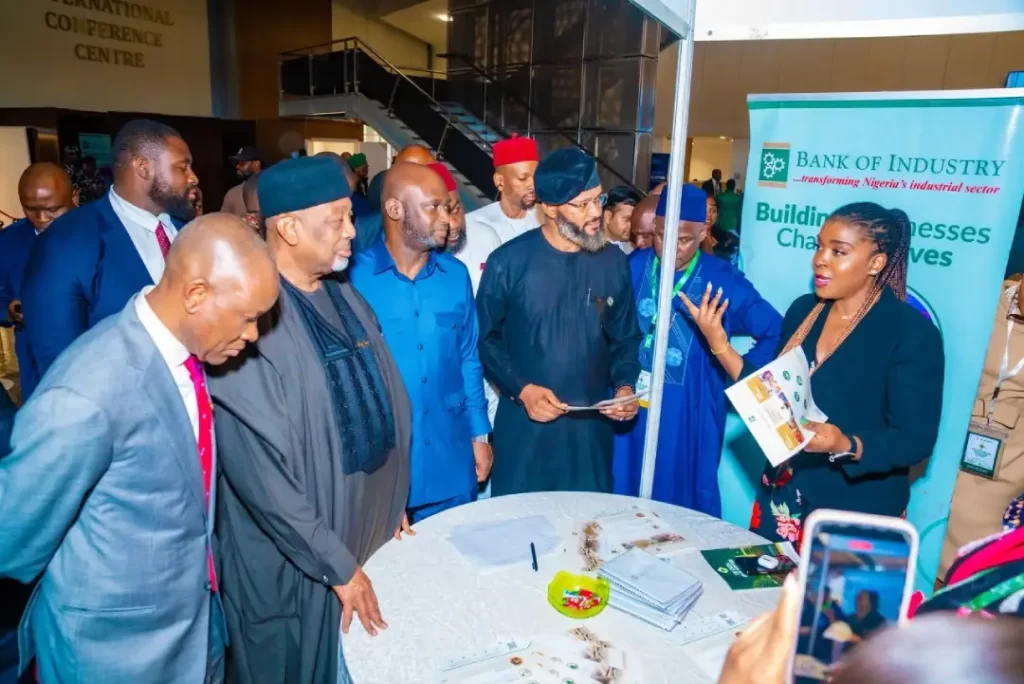
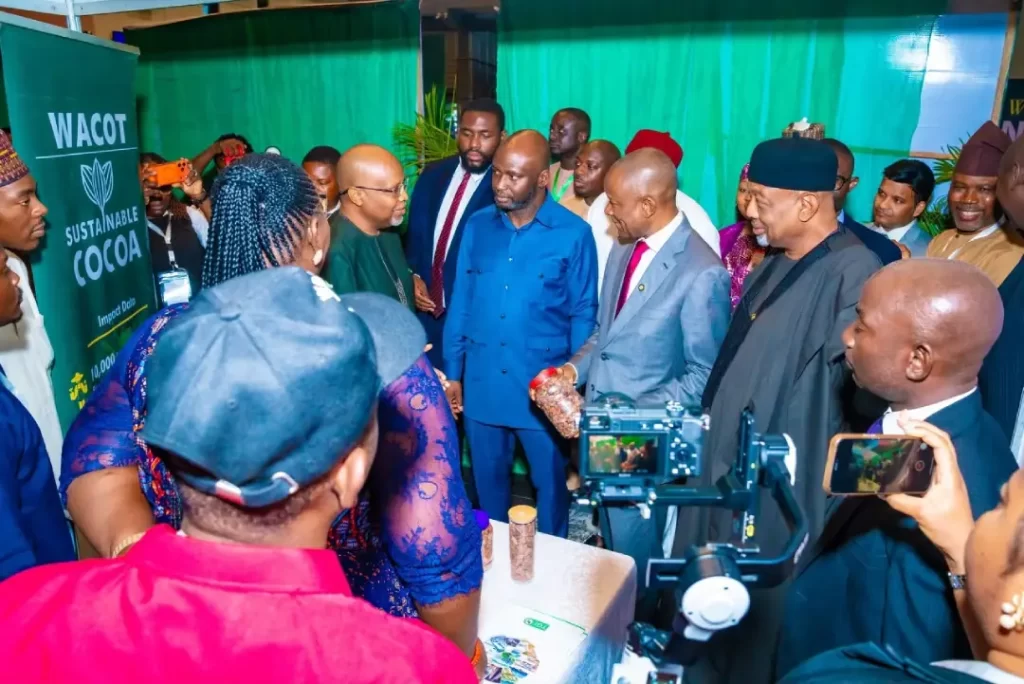
Nigeria cocoa value addition is set for a major boost as the Managing Director/Chief Executive Officer of the Bank of Industry (BOI), Dr. Olasupo Olusi, outlined the Bank’s strategy to finance the country’s transition from a raw cocoa exporter to a globally competitive cocoa-processing hub.
He outlined the Bank’s strategy to finance Nigeria’s transition from a raw cocoa exporter to a globally competitive cocoa-processing hub. Speaking at the Cocoa Value Addition Summit in Abuja on 14 July 2026, he said Nigeria’s next phase of industrialisation will depend on building domestic processing capacity and higher-value manufacturing across the cocoa value chain, rather than exporting raw commodities.

Nigeria’s Three Strategic Priorities to Nigeria’s Cocoa Value Addition Priorities
Dr. Olusi noted that Africa grows roughly 70% of the world’s cocoa, yet farmers capture only a fraction of its value, receiving an estimated six to eight kobo of every naira spent on a chocolate bar at retail. He said closing this gap is now within Nigeria’s reach.
Nigeria earned approximately ₦2.7 trillion from cocoa exports in 2024. Dr. Olusi described the revenue as an opportunity to invest in processing capacity, farm renewal and traceability infrastructure, rather than repeat the pattern of previous commodity booms.
He outlined a financing framework that combines long-term capital, blended finance and strategic partnerships to help build a more competitive cocoa processing ecosystem in Nigeria.
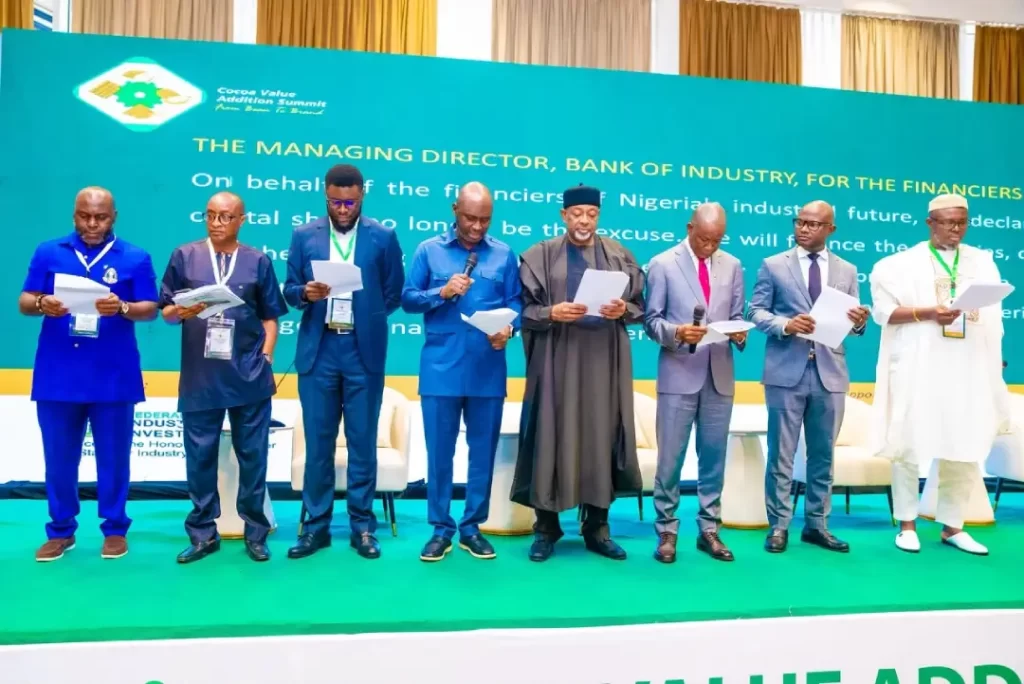
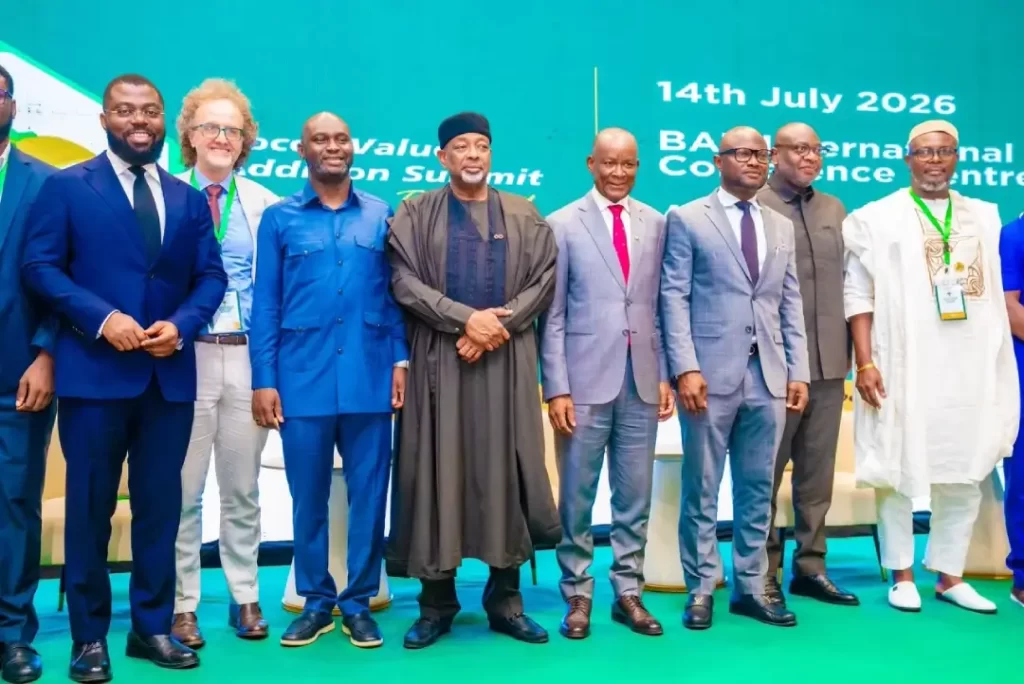
Key Takeaways
Nigeria produces over 300,000 tonnes of cocoa annually but grinds only about 50,000 tonnes, one of the widest gaps between cocoa production and processing among major producing countries.
BOI disbursed over ₦164 billion in 2025 to more than 3,500 agro and food-processing businesses, linking nearly 48,000 smallholder farmers into industrial value chains.
A €60 million credit facility from the European Investment Bank will support Nigerian processors to compete more effectively with better-financed multinational companies.


Why the Summit Matters
Dr. Olusi argued that recent price volatility has reshaped the industry and created opportunities for new entrants. Cocoa prices rose from under US$3,000 per tonne to a record near US$13,000 per tonne in December 2024, fell to around US$3,000 in February 2026, and have since recovered to about US$6,000 per tonne.
He also cited the European Union’s deforestation regulation, which requires cocoa entering the EU to be traced to a mapped plot of land, as an opportunity for Nigeria to position itself as a trusted, deforestation-free origin.
Closing the gap in Nigeria cocoa processing remains central to the plan, given the wide margin between what the country grows and what it grinds domestically.
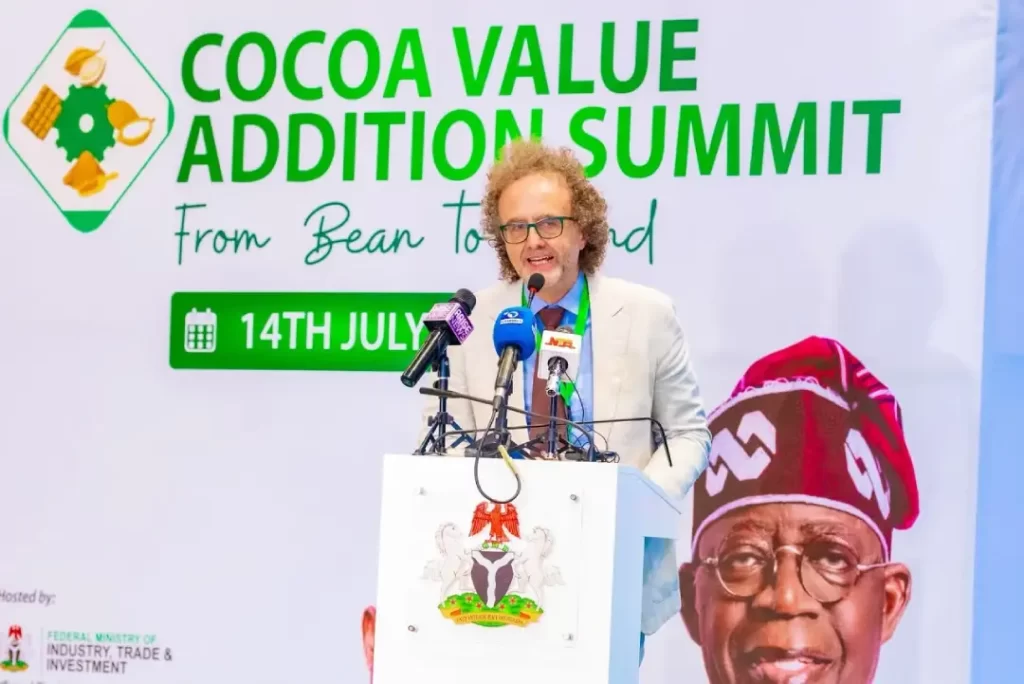
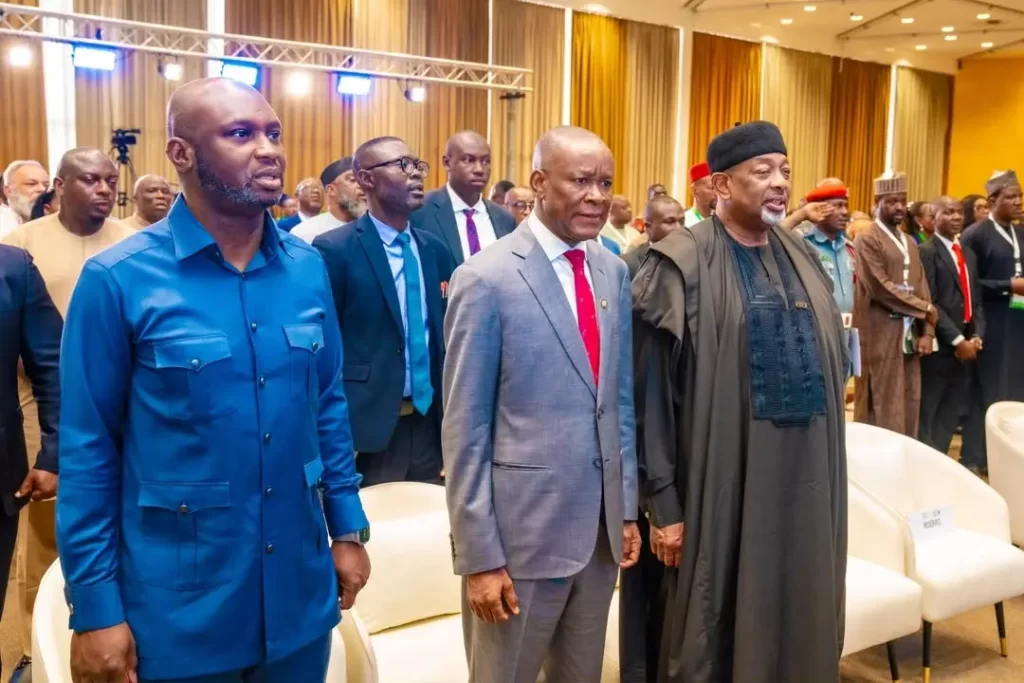
Nigeria’s Three Strategic Priorities
Nigeria currently produces more than 300,000 tonnes of cocoa annually but processes only around 50,000 tonnes, leaving significant value unrealised. Dr. Olusi said expanding domestic grinding capacity, beginning with cocoa powder, which Nigeria still imports despite producing the raw beans, could multiply the export value of the same crop by two to four times.
Beyond grinding, he identified industrial ingredients such as couverture, compounds and fillings for bakers, biscuit manufacturers and dairies across Nigeria and West Africa as another significant opportunity, noting that the regional market is not currently served by a major local supplier.
The third priority, he said, is provenance: building a certified, traceable Nigerian cocoa brand capable of commanding premium prices, beginning with the domestic market before expanding across Africa and international markets.
How BOI Will Finance the Transition
Dr. Olusi outlined a financing structure designed around the realities of the cocoa value chain. This includes replanting finance with grace periods aligned to the cocoa tree’s three-to-five-year maturity cycle, delivered in partnership with institutions such as the Bank of Agriculture and NIRSAL.
The framework also includes structured commodity finance through warehouse receipts, export prepayment, and working capital facilities tailored to the harvest cycle, alongside patient-term financing of seven to ten years for cocoa processing plants and ingredient manufacturing.
He also proposed shared infrastructure through a Cocoa Value Addition Park that would provide common processing facilities, quality laboratories, reliable utilities and digital traceability systems for processors of different sizes, supported by blended and concessional capital mobilised with development partners.
“We are not in the business of financing commodities. We are in the business of financing value creation.”
– Dr. Olasupo Olusi, Managing Director/Chief Executive Officer, Bank of Industry
What This Means for Nigeria’s Industrialisation
Dr. Olusi said the strategy would strengthen Nigeria’s industrial base through import substitution, export promotion, and job creation. Producing cocoa powder locally would reduce imports, while expanding processing capacity would enable Nigeria to export higher-value ingredients across ECOWAS and other international markets.
He added that new investments in grinding, ingredient manufacturing and packaging would create skilled industrial jobs, deepen local value addition and strengthen Nigeria’s position in the global cocoa industry.
Download the full keynote address (PDF) to read Dr. Olusi’s remarks in full.